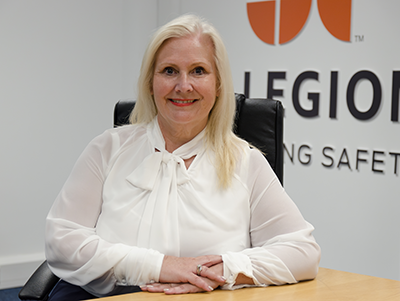
Nicola John - Managing Director, FDM Training and Development
I lead FDM’s operations, strategy and finances. I also design courses and qualifications with CITB and awarding bodies, and liaise with industry and government to drive skills, compliance and growth.
About You
How did your career journey lead you into the fire safety/fire door industry?
I was working for a private training provider when I was approached by one of my students' employers to work for his building maintenance company to help grow the business. At the time, I’d been working delivering leadership and management training for a while and decided to go back into industry for a new challenge. We worked in social housing maintenance, doing planned works, reactive repairs, and 24-hour callouts. A business opportunity arose for us to open a door manufacturing business in our region, and I managed this project from inception through 3 factory moves and significant growth, producing both standard and fire doors for the social housing, new build, and retrofit sectors in Wales.
Was this an industry you always intended to work in, or did you find it unexpectedly?
It was a very unexpected turn when I entered the construction/built environment world, but I loved the fast-paced, change-management challenge that running a multifaceted business presents. Lots of jobs on the go, with lots of different tradespeople offering our customers solutions, make each day a different challenge, which I really enjoyed.
Each role since then has evolved in response to the needs of the business, or in the case of FDM, to industry needs, providing solutions to meet the needs of the customer base.
Career & Professional Development
What has been the proudest moment of your career so far?
Setting up FDM in such a short period of time and getting so much industry support from our collaborators, who generously supply product and learning materials and help to make a difference to industry competence.
Dame Judith Hackitt's endorsement of what we had set up, how we’re embracing the changes needed for industry, and leading the way with FDM was also a proud career highlight.
Have there been any significant challenges you’ve had to overcome, and what did they teach you?
Throughout a career in a male-dominated environment, there are challenges, and if you are in a solutions-based business, you’ll always have challenges to overcome. However, the greatest rewards, but also challenges, have come from the fire door training journey, as not everyone embraces change when it comes from someone other than themselves. It has taught me to be more resilient and to trust my gut; just because someone’s in a position of authority doesn’t mean they are always right, and to surround myself with people who also want to see change. Thankfully, there are plenty of people who provide support and guidance even when things seem difficult.
What skills or qualities do you believe have been the most important to your success?
I’m not afraid to make decisions. I’m very considered in my approach, can think strategically, and can see a problem and come up with workable solutions that I can turn into an achievable plan that delivers results. I’m also not afraid to “put my head above the parapet” or to challenge when I think something is not right. Treating team members as individuals, assessing their skill sets, and getting the best from them to achieve our goals are also skills I’ve developed over my career.
Sometimes, to my detriment, I detest injustice and want everyone to always “do the right thing” – this certainly comes from being a police detective’s daughter.
What advice would you give to women considering a career in fire safety or the wider construction and manufacturing sectors?
I’d say it’s a very rewarding career; you can make a difference to people's lives when working with a lifesaving product, in whatever capacity you work within the industry. Analyse your own skills, utilise them daily to get results, and you’ll have a fulfilling career. We all like to feel that we are making a difference and that we’re in charge of our own destiny.
I’d also say being nice is not a weakness; you can be firm but always respectful to others – this is something I have tried to do throughout my career.
Leadership & Industry
What does good leadership mean to you?
Communication is key - with your team, your peers, your customers and the wider industry. You should have a clear plan and communicate that clearly and often when leading. It's about being approachable and listening to others, making informed decisions, and communicating your decisions and reasoning to the people who matter.
Choosing a team with complementary skills who all contribute to the goals of the organisation or project really helps make leadership fulfilling.
What changes would you still like to see across the industry?
I’d like to see more collaboration and speed of implementation of frameworks.
We know what we have to do as an industry, and many organisations are already embracing new ways of working and demonstrating compliance and competence. We should be sharing best practices and supporting innovative practices emerging in our industry.
What do you think makes the fire door sector such an important industry to be part of?
We have the opportunity to drive change and make the built environment safer for any resident or workplace that has a fire door. The safety of residents in their homes has always been a main driver for me to start and continue the work we do at FDM.
Family & Work-Life Balance
Balancing work and family life can be challenging. How do you manage it?
I’ve always been a working parent (for some of my career a working single parent). Feeling guilty unfortunately comes with the territory, and at different times in my career I’ve got it right and sometimes wrong! But my children, who are now all grown up with families of their own, all have a strong work ethic. They also know that being a career professional is in my DNA, and I truly enjoy the challenges of being a company director.
I also enjoy holidays, travel and spending time with my family – who are genuinely my favourite people on earth. This recharges the batteries, making you a better leader and colleague at work.
What support – whether from employers, colleagues or family – has made the biggest difference to your career?
My children have always been my biggest supporters, and now I have 6 grandchildren who also give me strength when I need it. There have been many influential people throughout my career who’ve given me the confidence and support to push boundaries and challenge things when necessary.
Do you think attitudes towards flexible working have improved in recent years?
There has been some improvement; however, we still have a long way to go regarding flexible working from both the employer and employee sides. Flexible working works best when there is give and take from both sides. In my experience, people at any level in an organisation do their best work when they feel listened to, supported, and communicated with.

